Triangle Housing Market: Price Cuts Explained
Real Estate, Triangle Housing Market, Price Cuts
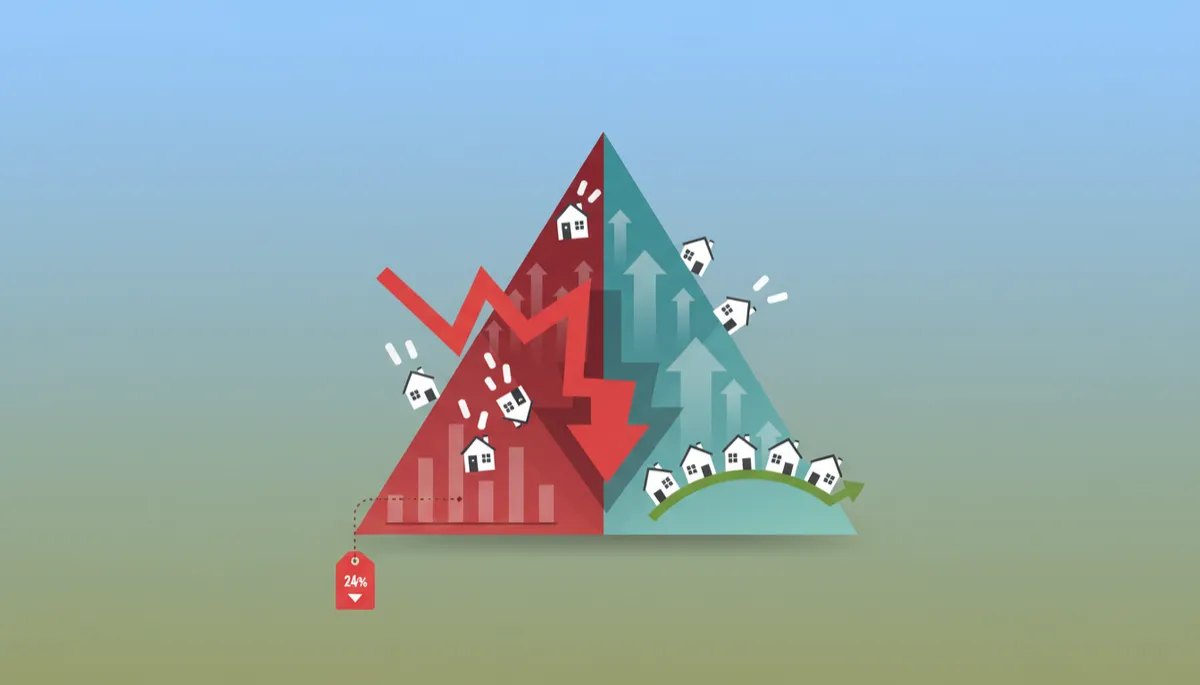
The Triangle’s 24% Price-Cut Club: Why Some Homes Drop and Others Don’t
Price cuts have quietly become part of the Triangle’s 2026 housing story. Roughly one in four listings in some pockets of Raleigh now join what you might call the “24% price-cut club”—but plenty of homes still sell quickly, at or above asking. Understanding why can help both buyers and sellers navigate this new, more balanced market with confidence.
Inside the Triangle’s 24% Price-Cut Club
After years of bidding wars and waived inspections, 2026 looks very different in the Raleigh–Durham–Chapel Hill region. Inventory is up, days on market are longer, and buyers have room to negotiate. In May 2026, Realtor.com reported that about one in four active listings in Raleigh had a price reduction, a rate well above the national average of roughly 17.5% (Realtor.com).
At the same time, the median list price in Raleigh slipped to about $469,900, down roughly 3.9% year over year. Redfin and local market reports show similar softening: median sale prices in Raleigh hovered near $424,000 in May, down 3.6% annually, while Durham dipped about 1.5% (David Velasquez, Redfin data).
Yet the story isn’t a crash—it’s a rebalancing. Triangle-wide, the median sales price in June 2026 was actually up a modest 0.6% year over year to about $415,109, and average prices climbed 4.1%, boosted by higher-end sales in places like Chapel Hill (Tana Widdows).
📌 Key Takeaway: The 24% price-cut club isn’t a sign of collapse—it’s evidence that buyers finally have leverage, and overpricing is getting called out by the market.
A Patchwork Market: Where Prices Fall and Where They Hold
The Triangle in 2026 is a study in contrasts. While Raleigh and parts of Durham are seeing more frequent price cuts, other submarkets remain stubbornly strong:
Raleigh: Forecast for a 3.7% price decline in 2026, with list and sale prices already softening (News & Observer, Realtor.com).
Durham: Down between about 1.5% and 7% year over year depending on the month and metric, but homes still sell quickly—often in under two weeks in summer 2026 (EasyDigz).
Cary and Apex: Median prices around $643,000 in Cary and $620,000 in Apex, with modest gains or only slight dips and relatively short days on market (David Velasquez).
Chapel Hill: The outlier. Median prices near $699,000 and up more than 20% year over year in some snapshots, with year-to-date gains around 6.6% through August (Mike & Ruth Realty).
Even within the Durham–Chapel Hill metro, the share of listings with price reductions has bounced around. FRED data shows large month-to-month swings in 2026—spikes in April and June followed by a noticeable pullback by August—underscoring how quickly sellers adjust when they sense they’ve overshot the market.
Well-priced, move-in-ready homes still sell fast, while aspirational listings drift into price-cut territory.
Why Some Homes Drop in Price—and Others Don’t
If the overall market is only gently cooling, why are so many individual homes slashing prices while others attract multiple offers? It comes down to a mix of pricing strategy, property condition, and location-specific demand.
1. Pricing into Yesterday’s Frenzy
Many price cuts are the result of overly optimistic list prices that assume 2021–2022 conditions still apply. With inventory in Wake County up about 21% year over year and days on market stretching beyond 30 in Raleigh (Stoic Properties), buyers have options. When a home launches at the top of the range, the market often responds with silence—and the listing eventually joins the price-cut club.
2. Condition and “Turnkey” Appeal
In a more balanced market, buyers are less willing to pay top dollar for homes that need work. Freshly updated, move-in-ready properties in good school zones still command strong offers. Homes with dated kitchens, deferred maintenance, or awkward layouts often sit longer and end up cutting price or offering credits for repairs and upgrades—a trend agents across the Triangle have reported throughout 2026 (Tana Widdows).
3. Micro-Location and Lifestyle Shifts
The Triangle is no longer a single, uniform market. Infrastructure projects and zoning changes are reshaping demand. The I-540 expansion and the RTP-3.0 rezoning, for example, are opening up new commutes and live-work-play hubs, making some previously “fringe” areas more attractive (Jim Allen Group, Axios).
Homes in prime school districts, walkable neighborhoods, or close to growing job centers often hold their price. Properties on busy roads, in less convenient pockets, or far from amenities are more likely to see reductions, especially when buyers can compare them against new construction or better-located resales at similar price points.
4. Affordability, Rates, and Negotiating Power
Mortgage rates hovering around 6% and a still-high but improving affordability index (about 86 in July 2026, up from 83 a year earlier) mean buyers are careful, not desperate (Doorify MLS). Realtor.com and Kiplinger both highlight that nationally, increased price cuts and longer days on market have tilted leverage back toward buyers, and the Triangle fits that pattern (Kiplinger).
Buyers today ask for more: closing cost help, repair credits, rate buydowns, or—if a home was clearly overpriced—a straight price cut. Sellers who price realistically from day one may not need to reduce at all; those who gamble often end up writing checks at the closing table.
What This Means for Triangle Buyers and Sellers in 2026
For buyers, the 24% price-cut club is a signal: you have more power than you’ve had in years. More inventory, longer days on market, and widespread reductions — especially in Raleigh and Durham — create room to negotiate and to be choosy about condition and location.
For sellers, it’s a reminder that strategy matters again. Thoughtful pricing, strong presentation, and realistic expectations are the difference between “just listed” and “price reduced.” In a rebalanced Triangle market, some homes will still attract multiple offers—but only the best-positioned ones will stay out of the price-cut club.
