
Triad Real Estate: Industrial Boom Insights
Triad Real Estate, Industrial Growth, Value Neighborhoods
Looking for a Value Deal? 10 Things You Should Know About the Triad's "Industrial Boom" Neighborhoods
The Greensboro–Winston-Salem–High Point Triad is quietly transforming into one of North Carolina's most dynamic industrial hubs. For buyers and small investors hunting for value, the neighborhoods orbiting this boom can offer a rare mix of affordability, job growth, and long-term upside—if you know what to look for.
1. The Industrial Boom Is Real—and It's Regional
The Triad isn't just seeing a few new warehouses—it's in the middle of a multi-year industrial build-out. From APG Capital's 279,000-square-foot logistics facility in Rural Hall to the Enterprise Industrial Park acquisition in High Point, investors are betting big on the region's role in manufacturing and distribution. Add in megaprojects tied to the Greensboro-Randolph Megasite and expansion around Piedmont Triad International Airport, and you have a clear pattern: jobs, freight, and capital are flowing into the area, with housing demand following close behind.
2. Job Growth Is a Quiet Price Driver in Nearby Neighborhoods
Industrial announcements don't just affect business parks—they ripple into the neighborhoods where workers want to live. Logistics, advanced manufacturing, and aerospace employers near PTI and High Point's industrial corridors are bringing in a mix of blue-collar, technical, and professional jobs. Over time, that steady employment base can support higher rents, lower vacancy, and gradual home price appreciation, especially in modestly priced areas that are still within a 15–25 minute commute of major plants and warehouses.
3. Value Lives Between the Headlines—Not in the Hot ZIP Codes
In Winston-Salem, ZIP codes like 27103 and 27106 grab attention with median prices north of $500,000 and quick sales. But if you're value hunting, the more modest bands—think $215,000–$260,000 in 27105, 27107, or 27127—often sit closer to industrial job centers and offer better cash-flow potential. The same story plays out in Greensboro, where neighborhoods priced below the city's roughly $289,000 median sale price can still be only a short drive from major employment clusters, yet trade at a discount to trendier in-town districts like Fisher Park or Lindley Park.
4. Infrastructure Projects Signal Where the Next Wave May Hit
Sewer extensions, road widenings, and interchange upgrades rarely make the front page, but they're often the earliest hints of which "edge" neighborhoods could be next. Alexander Industrial Park's new sewer line, for example, immediately boosted its development potential. Around the Triad, watch for similar utility and road improvements near existing industrial corridors—these can precede new facilities, truck traffic, and, eventually, demand for nearby workforce housing and small-business space.
5. The Market Is Balanced—But Industrial Pockets Can Outperform
Region-wide, the Triad in mid‑2026 sits in a balanced but still seller-leaning market: about three months of inventory and a sale-to-list ratio near 99%. Yet neighborhoods near industrial job nodes can behave differently. In some of these pockets, homes still move quickly, even as days on market creep up elsewhere. When you see stable or rising prices, low vacancy, and steady rent growth near new plants or logistics hubs, that's a sign those micro-markets may be more resilient through future cycles than the broader region.
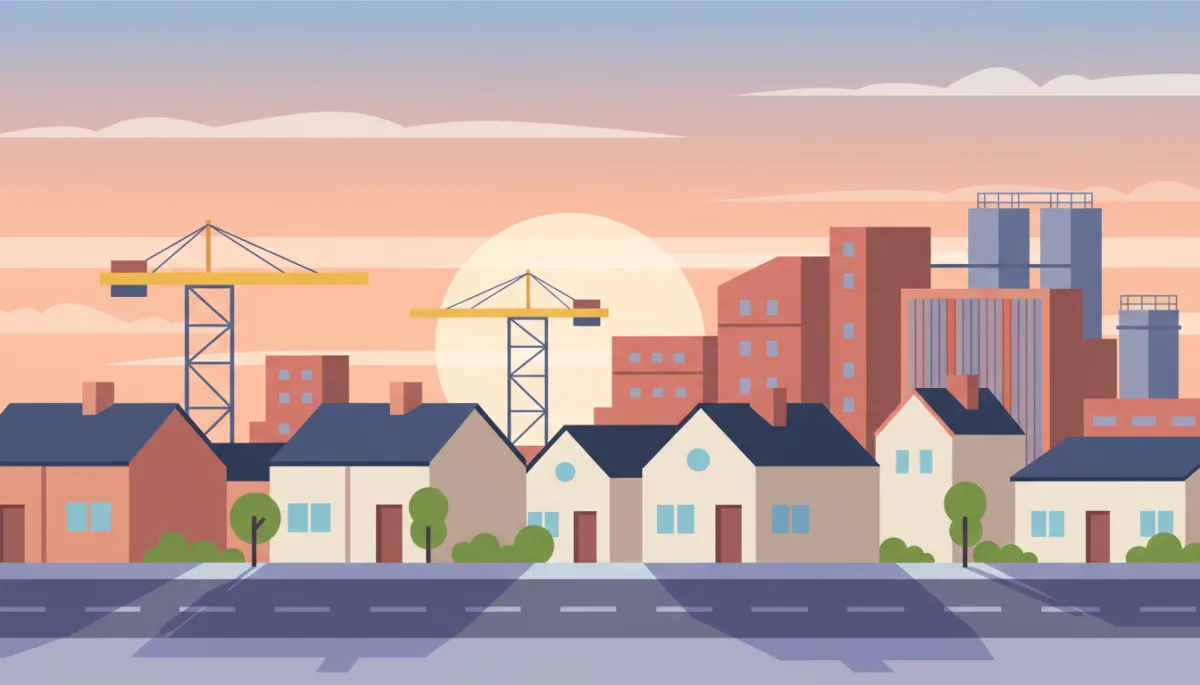
Modest neighborhoods near job hubs often see demand rise before prices catch up.
6. Industrial Boom Neighborhoods Aren't Always "Pretty"—Yet
If you're expecting tree-lined historic districts, you may be looking in the wrong place. Many of the best value plays sit in transitional areas: older ranch homes, small brick duplexes, or post-war neighborhoods with a mix of owner-occupants and renters. They may lack coffee shops on every corner today, but they offer what matters most for long-term value: access to jobs, functional housing stock, and prices that still leave room for renovation and rent growth as the area stabilizes and amenities follow.
7. Commute Time and Truck Routes Matter More Than City Limits
In an industrial boom, workers care less about which municipality they live in and more about how long it takes to reach the plant gate. Neighborhoods with quick access to I‑40, US‑52, or the PTI area—without being right on top of heavy truck traffic—tend to attract stable, long-term tenants. As a buyer, map your target streets against major employment centers and freight routes. A 20-minute, mostly highway commute can be a huge selling point, especially for shift workers and logistics professionals who value predictable drive times over trendy ZIP codes.
8. Rents Often Move Before Sale Prices Do
In many Triad submarkets, sales prices have risen modestly—around 2–3% year-over-year—while rents have adjusted faster in areas close to new job centers. With average Greensboro rents hovering in the low $1,300s and still climbing in some workforce neighborhoods, a house that looks "average" on a price-per-square-foot basis can be a strong cash-flow play if it sits near a growing industrial corridor. Watching rental listings and vacancy trends block by block can reveal opportunity well before the for-sale data catches up.
9. Incentives and Corporate Investments Can Anchor Long-Term Demand
Big-ticket projects don't happen in a vacuum. The Greensboro-Randolph Megasite, PTI expansion, and major private acquisitions in Rural Hall and High Point are backed by state and local incentives, infrastructure commitments, and multi-year corporate plans. While no job is guaranteed forever, that level of public-private investment typically points to a long runway for employment in the surrounding area. For buyers, that can translate into more predictable rental demand and a stronger case for holding property through short-term market fluctuations.
10. Due Diligence Is Non-Negotiable—Even in "Bargain" Areas
Industrial-adjacent neighborhoods can offer compelling value, but they also come with extra homework. Before you buy, dig into zoning, future land use plans, and any proposed road or rail changes that could affect noise, traffic, or flood patterns. Talk with a local agent who tracks both housing and industrial news, not just one or the other. And remember: a "deal" isn't just a low price—it's a property whose rent potential, maintenance needs, and neighborhood trajectory all pencil out over the next 5–10 years, not just this month's closing table.
📌 Key Takeaway: The Triad's industrial boom is reshaping where value lives. Focus on job access, infrastructure, and realistic rents—not just today's listing prices—if you want a neighborhood that works hard for your dollars.
