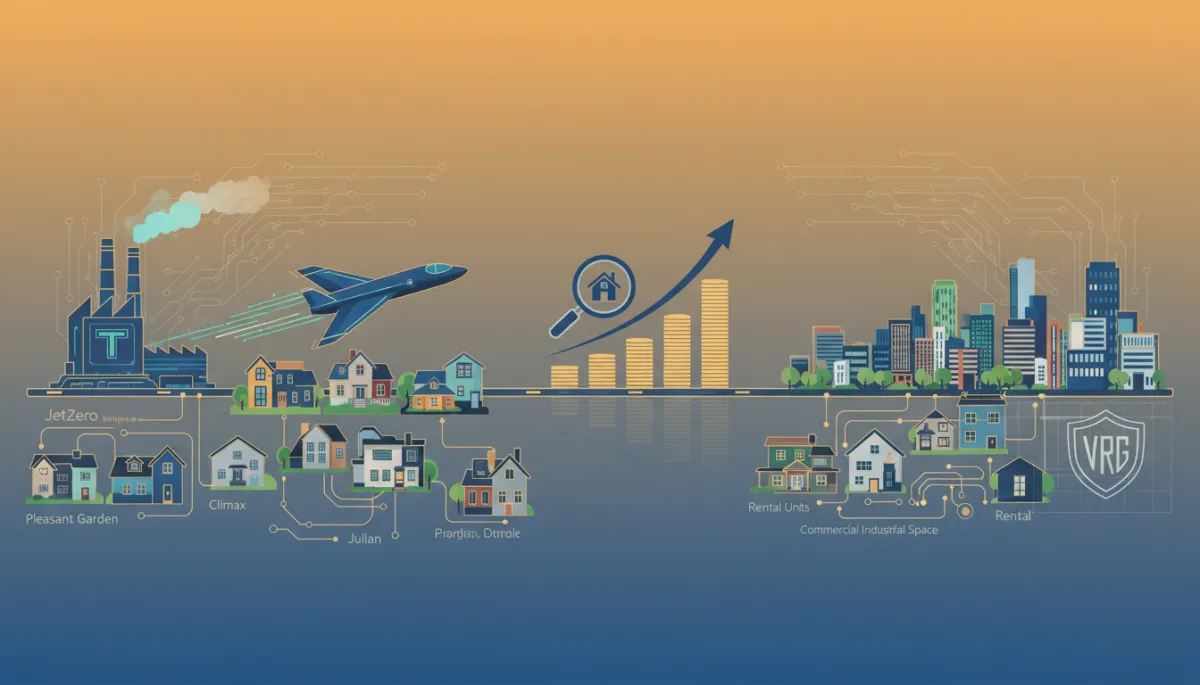
Triad's Industrial Boom: Impact on Property Values
Real Estate, Triad Market, Industrial Growth
How the Triad’s Industrial Boom Is Changing Your Property Value
Toyota’s $13.9 billion battery plant in Liberty and JetZero’s multi‑billion‑dollar aerospace project near PTI Airport are rewriting the future of the Piedmont Triad. For homeowners in nearby communities like Pleasant Garden, Climax, Julian, and Burlington, this isn’t just economic news—it’s a direct line to changing property values, new opportunities, and new risks. Here’s how to read the moment and position yourself to win with the help of local experts like Vanyette Realty Group.
The New Industrial Powerhouses: Toyota and JetZero
The Triad has long been known for its central location and transportation access, but the current wave of investment is on a different scale. Two names stand out: Toyota and JetZero.
Toyota has launched its first‑ever U.S. battery manufacturing facility in Liberty, North Carolina, right in the Piedmont Triad region. The 1,850‑acre mega‑site represents nearly $13.9 billion in investment and more than 5,000 new jobs as production ramps up through 2026 (pressroom.toyota.com). At full capacity, the plant can produce around 30 GWh of batteries annually, supporting Toyota’s hybrid and electric vehicle lineup nationwide.
On the aviation side, JetZero is poised to transform the land around Piedmont Triad International (PTI) Airport. With a projected $4.7 billion investment and an anticipated 14,560 jobs by 2063 at average salaries around $89,340, the company’s advanced aircraft manufacturing plans add a second, powerful engine of growth to the region (homesintriadnc.com).
Together, these projects are not just creating jobs—they are reshaping how land is valued, where people choose to live, and how quickly once‑quiet communities evolve.
How Industrial Growth Translates into Property Value Shifts
When a region lands multi‑billion‑dollar employers, the first impact is obvious: jobs. But for homeowners, the more important story is how those jobs ripple through housing demand, infrastructure, and land values.
More workers, more households: Toyota’s 5,000+ jobs and JetZero’s long‑term hiring plans bring thousands of new residents and relocating professionals who need places to live—both rental and for‑sale homes.
Infrastructure upgrades: Highway improvements like upgrades to US 421 and the conceptual I‑685 corridor are making commutes easier and opening up new development corridors around the Liberty and PTI areas (nceda.org).
Undervalued land catching up: Around PTI, raw land has been trading as low as $9,500–$12,000 per acre, while improved residential lots can command $40,000–$60,000 per acre—a gap that signals future appreciation as infrastructure and demand catch up (homesintriadnc.com).
At the metro level, Triad home prices are no longer surging like they did in earlier years, but they’re still expected to see modest 2–5% appreciation in 2026 (homesintriadnc.com). That slower pace can actually be good news for strategic homeowners: it creates a window to reposition properties—through renovation, rezoning, or timing a sale—before the next leg of growth takes hold around these industrial centers.
The Ripple Effect: Pleasant Garden, Climax, Julian, and Burlington
Industrial projects rarely transform only the town where they sit. Instead, they send out concentric waves of change. For the Toyota and JetZero boom, those waves are already reaching communities like Pleasant Garden, Climax, Julian, and Burlington.
Pleasant Garden: Quiet Suburb, Rising Demand
Pleasant Garden sits within an easy commute of both PTI and Liberty. Historically, it has attracted buyers seeking acreage, privacy, and a slower pace. As Toyota and JetZero drive job growth, Pleasant Garden’s blend of rural character and accessibility becomes far more valuable:
Larger lots may appeal to higher‑earning professionals looking for space without leaving the region.
Older homes with solid bones but dated interiors are prime candidates for value‑add renovations aimed at this new buyer pool.
Climax and Julian: From Pass‑Through to Prime Position
Once considered “on the way to somewhere else,” Climax and Julian now sit near the heart of Toyota’s gravitational pull. As commuting patterns shift:
Raw land and small farms can become attractive for future subdivision or build‑to‑rent communities serving plant workers and suppliers.
Modest single‑family homes may see increased interest from investors looking to convert them into long‑term rentals as housing demand outstrips supply.
Burlington: A Regional Hub with New Momentum
Burlington already functions as a regional employment and retail hub between the Triad and the Triangle. As Liberty’s battery plant scales up, Burlington’s role as a residential and commercial “release valve” strengthens:
Buyers priced out of hotter metros may see Burlington as a value play with strong long‑term fundamentals.
Investors can target properties near commuter routes that connect efficiently to Liberty, PTI, and Greensboro.
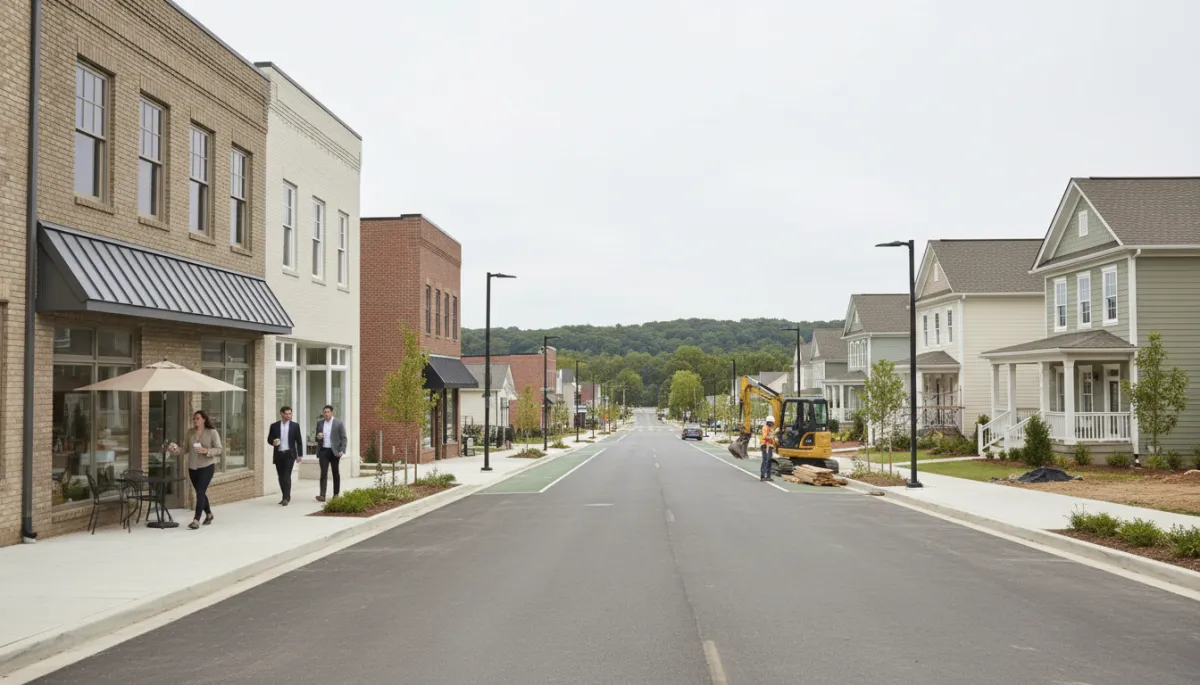
Smaller Triad towns are quietly absorbing demand from new industrial jobs and commuters.
How Homeowners Can Leverage the Boom: Valuation, Timing, and Renovation
The industrial surge doesn’t automatically mean every property will double in value. The winners will be the owners who understand what to improve, when to act, and how to position their homes for the new wave of demand. Here’s how to approach it strategically.
1. Get a Reality Check on Valuation—Not Just a Zestimate
Online estimates rarely keep pace with hyper‑local shifts driven by new employers or rezoning. In parts of Guilford County, for example, raw land is still selling for far less than its future improved‑lot potential, even as demand for 30,000 new housing units by 2030 looms over the market (homesintriadnc.com).
A local broker familiar with Toyota and JetZero’s hiring timelines, infrastructure plans, and nearby land sales can help you understand:
Whether your home is already priced at a premium—or still lagging behind coming demand.
How your acreage, zoning, or proximity to major corridors might justify a higher valuation than current comps suggest.
2. Time Your Move Around Hiring Waves and Interest Rates
In 2026, the Triad market overall is seeing cooler price growth—Greensboro’s average home value is around $257,000–$259,000, with only mild appreciation expected (propertyiq.app). That gives homeowners a planning window before the full impact of industrial hiring is absorbed into prices.
If you’re selling: Consider aligning your listing with major hiring announcements or ramp‑up phases at Toyota and JetZero, when relocating employees are actively shopping for homes.
If you’re holding and improving: Use 2026’s more balanced conditions to complete renovations without competing against frantic buyers for contractors and materials.
3. Renovate for the New Buyer and Renter Profile
Many of the jobs tied to Toyota and JetZero come with above‑average salaries. JetZero’s projected average of about $89,340 can support a home purchase in the $310,000–$340,000 range at current rates (homesintriadnc.com). That means your renovation strategy should target buyers and renters with higher expectations for finishes and functionality.
Prioritize kitchen and bath updates, modern flooring, and energy‑efficient systems—features that appeal to professionals in engineering, manufacturing, and tech roles.
Consider adding or staging a dedicated home office, especially for hybrid workers tied to regional employers but working partially from home.
In rural or semi‑rural areas, highlight storage, workshop, or hobby space that can appeal to hands‑on professionals and small business owners.
💡 Pro Tip: Before spending a dollar on upgrades, ask a local agent who understands the Toyota and JetZero buyer pool which improvements actually move the needle in your specific neighborhood.
Why the Triad Is an Ideal Investment Destination in 2026
For both local owners and out‑of‑area investors, the Triad in 2026 offers a rare combination: affordable prices today paired with powerful long‑term economic drivers. Several factors stand out.
Strong Rental Demand and Attractive Yields
Even as rents have cooled slightly year‑over‑year, the Triad remains a cash‑flow friendly market. Median rent in the Greensboro–High Point metro sits around $1,484, with Greensboro showing recent month‑to‑month rent growth (doorstead.com). Gross rent yields in Greensboro are estimated near 6.5%, and cap rates across the Triad commonly fall in the 6–10% range (propertyiq.app; homesintriadnc.com).
For investors, that means the Triad is less about speculative “flip and hope” and more about steady, income‑driven returns backed by growing employment centers in manufacturing, aviation, logistics, healthcare, and education.
Industrial Space and Job Diversity as Long‑Term Anchors
Toyota and JetZero are high‑profile examples of a broader pattern: the Triad is becoming a national hub for advanced manufacturing and logistics. Add in other players like Boom Supersonic and existing aerospace and automotive suppliers, and you have a region where:
Industrial and warehouse space is in sustained demand, supporting jobs that, in turn, support housing demand across price points.
Economic diversification across manufacturing, higher education, healthcare, and logistics reduces the risk that one industry downturn will derail the entire housing market.
Economic Diversification and In‑Migration
North Carolina continues to attract new residents from higher‑cost states, drawn by a lower cost of living and expanding job opportunities. The Triad benefits from this trend while still offering entry prices below major metros. Median home values in Greensboro, for example, hover around the mid‑$200,000s—far below many Sun Belt peers—yet the region’s employers are increasingly national and global in scale (zillow.com).
For investors and existing homeowners alike, that combination of affordability, job growth, and diversification makes the Triad a compelling place to buy, hold, and improve property in 2026 and beyond.
Avoiding the “Industrial Trap”: Risks to Watch
With so much good news, it’s easy to assume any property near Liberty or PTI is a guaranteed winner. That mindset can lead straight into what we’ll call the “Industrial Trap.” Here’s what that looks like—and how to avoid it.
Overpaying for speculation: Not every parcel near a plant will be rezoned, serviced with utilities, or in a path of growth. Buying raw land at a premium without a clear entitlement path can lock you into years of taxes, insurance, and interest with little upside.
Ignoring carrying costs: Land loans often require 25–35% down with interest rates around 7.5–8.5%, plus property taxes and insurance (homesintriadnc.com). Those costs can quickly erode returns if your time horizon is longer than expected.
Underestimating entitlement timelines: Zoning changes, environmental studies, and utility extensions can take 12–36 months or more. Buying land that “might” be developable without understanding these hurdles is a recipe for frustration.
📌 Key Takeaway: The industrial boom creates real opportunity—but only for buyers and owners who pair optimism with grounded, local due diligence.
Why Local Expertise from Vanyette Realty Group Matters More Than Ever
In a fast‑changing market, national headlines and online charts only tell part of the story. The difference between a property that simply “rides the wave” and one that outperforms often comes down to hyper‑local insight—exactly what a firm like Vanyette Realty Group brings to the table.
Neighborhood‑level knowledge: Understanding which pockets of Pleasant Garden, Climax, Julian, and Burlington are most likely to benefit from commuter patterns, school preferences, and future infrastructure—not just distance “as the crow flies” from a plant or airport.
Strategic pricing and positioning: Advising homeowners on whether to list now, hold and renovate, or reposition a property as a rental to capture industrial‑driven demand for workforce and executive housing.
Investor‑savvy guidance: Helping buyers evaluate land‑banking opportunities near PTI and Liberty, model carrying costs, and identify parcels where zoning, utilities, and market timing align with their goals.
Whether you’re a homeowner wondering what Toyota’s battery plant means for your Pleasant Garden property, or an investor eyeing acreage outside Burlington, having a local advisor who lives and breathes Triad market data—and understands how industrial growth actually plays out on the ground—can be the difference between a smart move and a costly misstep.
Turning the Industrial Boom into Your Advantage
The Triad’s industrial boom is not a short‑lived headline—it’s a long‑term reset of how land, housing, and opportunity are distributed across the region. Toyota’s $13.9 billion Liberty facility and JetZero’s multi‑decade aerospace project are anchoring thousands of well‑paying jobs, driving infrastructure investment, and pushing housing demand outward into communities that once felt far from the action.
For property owners, the key is to move from being a passive observer to an active strategist:
Understand how these projects are reshaping values in your specific town and neighborhood—not just the region as a whole.
Align your timing, pricing, and renovation plans with the hiring and infrastructure timelines that will drive the next phase of demand.
Lean on local expertise—from groups like Vanyette Realty Group—to avoid the Industrial Trap and focus on properties and strategies with real staying power.
The opportunity is here. The question is how you’ll position your property—whether in Pleasant Garden, Climax, Julian, Burlington, or beyond—to make the most of this once‑in‑a‑generation shift in the Triad.
