Stop Letting Market Anxiety Stall Your Move: How to Conquer the Fear of Overpaying
Here's the truth: I've sat across the table from hundreds of buyers in the Triangle and Triad who were ready to make a move: until fear stopped them cold. The fear of overpaying. The fear of choosing the wrong home. The fear that they'll wake up six months later realizing they made a $50,000 mistake.
These concerns are absolutely natural. But here's what I tell every client who's paralyzed by market anxiety: fear is expensive. Every month you wait because you're scared of overpaying, you're potentially watching prices climb, interest rates shift, and perfect properties disappear. The key isn't eliminating fear: it's learning to make confident decisions despite it.
Let me walk you through exactly how to conquer this fear and move forward with clarity.
1. Understand What "Overpaying" Actually Means in Today's Market
Don't fall into the trap of thinking there's some magical "perfect price" floating out there that you're going to miss. Real estate isn't a Target clearance rack with fixed discount percentages. The market value of a home is literally what a qualified buyer is willing to pay and what a seller is willing to accept: on that specific day, in that specific neighborhood.
In the Raleigh-Durham area, for example, I've watched homes in Cary sell for 3-5% over asking price consistently over the past year, while certain pockets of Greensboro see homes sitting longer and selling closer to list price. Neither scenario represents "overpaying": they represent two different market conditions.
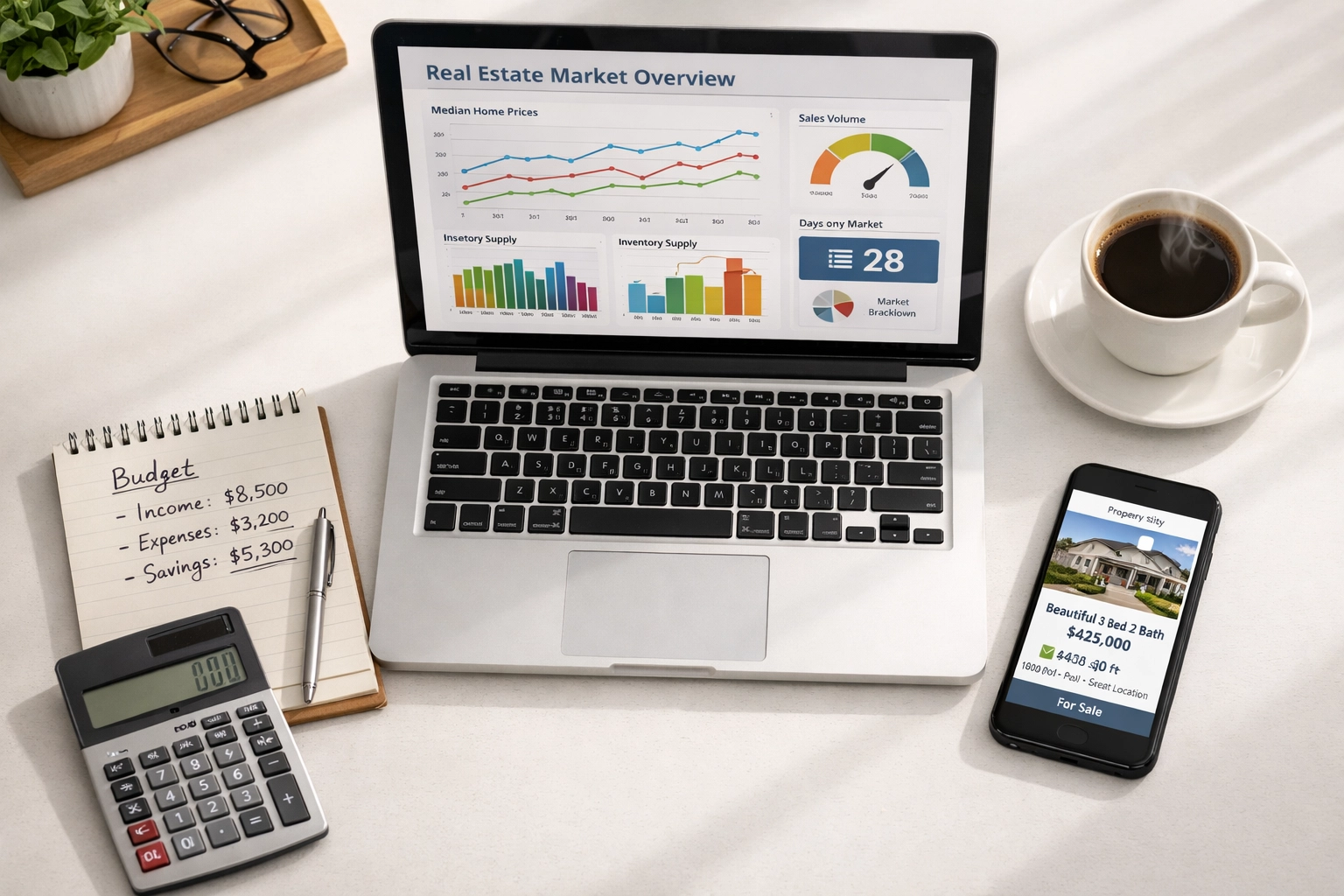
Here's what actually constitutes overpaying:
Buying a home priced 10-15% above comparable sales in the same neighborhood within the last 90 days
Waiving a home inspection and discovering $30,000+ in immediate repairs needed
Stretching your budget to a monthly payment that leaves you house-poor (more on this in a minute)
Everything else? That's just market dynamics, and you can't let perfect be the enemy of good enough.
2. Get Brutally Honest About Your Financial Guardrails Before You Look
This is where most buyers go wrong, and it costs them sleep, money, and peace of mind. They start shopping for homes before they've established their non-negotiables.
Before you tour a single property, sit down and answer these questions:
What monthly payment keeps you comfortable? Not stressed, not stretched thin: comfortable. If you're currently paying $1,500 in rent and you think you can handle $2,500 for a mortgage, property taxes, and insurance, don't bite off more than you can chew. Factor in the reality that your utilities, maintenance, and unexpected repairs will cost more than your apartment ever did.
What's your absolute ceiling? Let's say you get pre-approved for $425,000. That doesn't mean you should look at $425,000 homes. Set your ceiling at $390,000-$400,000 and give yourself breathing room. I've seen too many buyers max out their approval only to realize they can't afford furniture, can't save for emergencies, and can't sleep at night.
What's your "walk away" number? Decide in advance: if a home you love is listed at $375,000, what's the maximum you'd pay in a competitive situation? $385,000? $390,000? Write it down. When emotions run high during negotiations, this number becomes your anchor.
Bottom line is this: once you've set these boundaries, stick to them like your financial future depends on it: because it does.
3. Educate Yourself on Local Market Trends (It Takes 3 Hours, Not 3 Weeks)
Knowledge demolishes anxiety. But you don't need a real estate license to get smart about your market: you just need to spend a focused afternoon doing research.
Here's your homework:
Pull recent sales data for your target neighborhoods. In North Carolina, this information is public. Look at what homes actually sold for (not just listed for) in the last 60-90 days. Pay attention to:
Average days on market
Sale price vs. list price ratios
Price per square foot
For example, if you're looking at homes in Durham's Northgate Park area and you see that homes are consistently selling within 10 days at 98-102% of asking price, you know you're in a competitive market. Adjust your expectations accordingly.
Understand what's driving demand in your area. Is it new corporate relocations? Limited inventory? School district ratings? When you understand why prices are where they are, you'll feel more confident in your offers.

Talk to your real estate agent about micro-market trends. I can tell you that right now, certain ZIP codes in Winston-Salem are seeing bidding wars while others 15 minutes away have plenty of negotiating room. Your agent should be able to break this down for you with specific examples and data.
This education doesn't make you an expert overnight, but it does something more important: it shifts you from reactive fear to informed decision-making.
4. Focus on What You Can Actually Control
Here's what you cannot control:
Whether another buyer submits a higher offer
If interest rates jump 0.5% next month
How quickly inventory hits the market
Here's what you absolutely can control:
Your loan pre-approval status and credit score
How quickly you respond when the right home appears
The thoroughness of your home inspection and due diligence
Your willingness to be flexible on closing dates or minor requests
The fear of overpaying often stems from fixating on factors that are completely beyond your influence. When you redirect your energy toward the controllables, you'll feel more confident and less helpless.
Actionable step: Create a "control checklist" with your agent. List every single item within your power: updating documents, securing financing, scheduling inspections: and focus your mental energy there. Every time you catch yourself spiraling about market conditions, redirect to your checklist.
5. Kill Emotional Attachment Before It Kills Your Budget
Let me tell you about a client who fell in love with a home in Chapel Hill. Beautiful place, perfect backyard, great schools. They were pre-approved for $450,000, but this home was listed at $465,000. They convinced themselves it was "the one" and offered $480,000 in a bidding war.
They got the house. They also got buyer's remorse, financial stress, and a marriage strained by money fights within six months.
Don't let this be you. No single home is worth derailing your financial stability. There will always be another property. Always.

Here's how to protect yourself:
View at least 10-15 homes before making any offer. This calibrates your expectations and prevents you from latching onto the first decent option.
Remind yourself that compromise is non-negotiable. You will not find a home that checks every box. Maybe it's the perfect layout but needs updated bathrooms. Maybe it's in your dream neighborhood but has a smaller yard. Get comfortable with trade-offs early.
Practice the "72-hour rule." If you think you've found "the one," wait 72 hours before increasing your offer or waiving contingencies. If you still feel good about the decision after that cooling-off period, move forward. If doubt creeps in, walk away.
6. Use Data as Your Emotional Circuit Breaker
When fear starts whispering that you're overpaying, pull out the numbers. Facts beat feelings every time.
Get a Comparative Market Analysis (CMA) from your agent. This report shows you what similar homes have sold for recently and where your target property fits in that range. If you're looking at a 2,200 square-foot home in Apex listed at $425,000 and the CMA shows that comparable homes sold between $410,000-$435,000 in the last 90 days, you know you're in a reasonable range.
Ask your agent to walk you through these comps in detail. What makes one home worth $410,000 and another worth $435,000? Is it upgrades? Lot size? Condition? Understanding these nuances helps you evaluate whether your target property is fairly priced.
And here's the vital point: if the numbers don't support the price, walk away. Period. No amount of "loving the kitchen" justifies overpaying by $40,000.
Your Clear Takeaways: Moving Forward with Confidence
Look, the emotional roller-coaster of home buying is real. But here's what I want you to remember:
Fear of overpaying is valid: but it shouldn't be paralyzing. Set your financial boundaries, educate yourself on local market data, and focus on factors within your control. Work with a real estate professional who will give you honest feedback and pull you back when emotions override logic.
The "perfect" decision doesn't exist. You're making the best decision possible with the information available today. That's all anyone can do.
Waiting has a cost too. Every month you delay because you're scared of making a mistake, you're potentially losing ground to rising prices or increasing interest rates. At some point, you have to accept reasonable risk and move forward.
The market will always have uncertainty. Prices will fluctuate. You might buy a home and see a similar one list for $10,000 less three months later. That's real estate. But if you've done your homework, set firm boundaries, and made an informed decision based on data rather than fear, you haven't overpaid: you've simply participated in the market as it exists.
Ready to stop letting anxiety stall your move? Let's review your local market trends together and create a strategy that gives you confidence to act.
