
Starting with Clarity: Why Your Vision Matters More Than the House Hunt
I've watched too many buyers dive headfirst into house hunting without stopping to ask themselves one critical question: What do I actually want from this move?
And I get it: when you're scrolling through listing photos or driving through neighborhoods in Wake, Durham, or Johnston County, it's tempting to just start checking boxes. Three bedrooms? Check. Updated kitchen? Check. But here's what I tell every client who walks through our doors at Vanyette Realty Group: Knowing what you want out of a home or a move is more important than rushing to check boxes.
Taking the time to clarify your priorities, from location to layout to lifestyle, makes every decision afterward smoother. Even small choices feel less stressful when the vision is clear. Let me show you why starting with clarity beats rushing into the hunt every single time.
Why Most Buyers Get This Backwards
Here's the trap most people fall into: They start looking at homes before they've defined what success actually looks like. They tour a dozen properties, compare granite countertops, debate whether they really need that third bathroom, and then wonder why they feel overwhelmed and indecisive.
The problem isn't the houses: it's the approach.
When you start shopping before you've clarified your vision, you're essentially asking the market to tell you what you want. That's backwards. You end up reacting to whatever pops up on Zillow rather than proactively searching for what aligns with your actual life.

I've seen buyers rule out perfectly good homes because of minor cosmetic issues: outdated light fixtures, beige walls, carpet that could be replaced for under $2,000. Meanwhile, they overlook major advantages like proximity to their workplace, walkability, or a thriving neighborhood community. Why? Because they didn't establish their priorities first.
Bottom line is this: If you don't know what matters most to you, every house will feel like a compromise, and you'll second-guess every decision.
What "Starting with Clarity" Actually Means
Let me be clear: I'm not talking about making a Pinterest board of dream kitchens (though if that helps you, go for it). Starting with clarity means answering the hard questions before you set foot in a single property:
1. What's driving this move in the first place?
Are you relocating for work? Downsizing after the kids moved out? Finally ready to stop throwing rent money away? Your "why" shapes everything else. A first-time buyer building equity has different priorities than a retiree looking to simplify.
2. What does your daily life look like: and what do you want it to look like?
Do you work from home and need dedicated office space? Are you walking your dog twice a day and need sidewalks? Do you cook elaborate meals or mostly reheat leftovers? Your actual lifestyle (not the aspirational one) should drive your space requirements.
3. What are your non-negotiables versus nice-to-haves?
This is where most people get tripped up. Everything feels important until you force yourself to rank priorities. Maybe you absolutely need to be in a specific school district, but you're flexible on square footage. Maybe you need a single-story layout for accessibility, but you don't care about a fancy master bath.
4. What could you live with: or change yourself?
One of my favorite pieces of advice comes from an agent who tells clients: "Don't look at what it has, look at what it could have. Envision what you could do to it to make it YOUR own." That outdated kitchen? You can renovate it. Those builder-grade fixtures? Swapped out in an afternoon. A cramped backyard? You can't exactly add an acre.
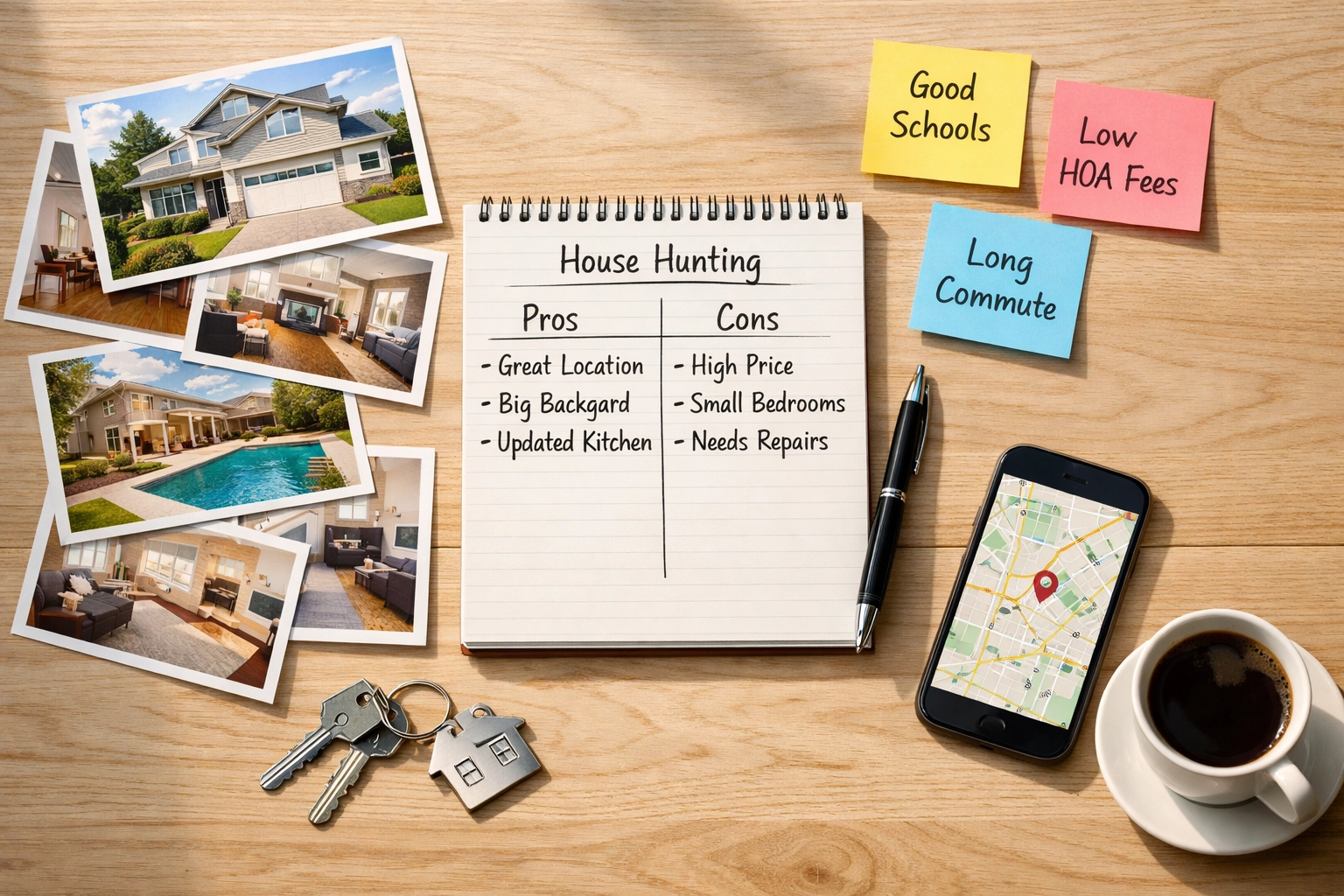
Getting clear on these questions before you start touring homes will save you from wasting weekends looking at properties that were never going to work.
Real Talk: The Neighborhood-vs-House Dilemma
Here's a scenario I see play out constantly in the Triangle and Triad markets:
A buyer finds a beautifully updated, spacious home that checks every box on their wish list. There's just one problem: the neighborhood feels off. Maybe it's too far from amenities, or the community vibe doesn't match their lifestyle, or they just don't feel excited about coming home to that street every day.
But the house is so nice. And it's in budget. And the kitchen has quartz countertops.
So they convince themselves the neighborhood doesn't matter that much. They buy the house. And six months later, they're miserable because they're spending 90 minutes a day in traffic or they feel isolated from the things they actually enjoy doing.
Here's what clarity does: It forces you to rank neighborhood quality against home features before you're standing in a gorgeous living room trying to make a decision under pressure.
I worked with a buyer who initially wanted a larger, recently remodeled townhouse. She found one that fit the bill: plenty of space, brand-new everything, move-in ready. The catch? It was in a neighborhood that felt disconnected from the lifestyle she wanted. No walkability, limited community feel, and a longer commute than she'd hoped for.
After we stepped back and revisited her vision: peaceful evening walks, coffee shops within strolling distance, a community where she'd feel safe and connected: she realized that a smaller, less remodeled condo in a better neighborhood was the right choice. Even though it didn't meet all her initial criteria on paper, it aligned with what actually mattered for her quality of life.

That's the power of starting with clarity. You make strategic compromises based on what truly matters instead of getting distracted by shiny features that don't move the needle on your happiness.
How Clarity Reduces Stress (Even in a Competitive Market)
Let's talk about something nobody warns you about: decision fatigue.
When you're touring multiple homes every weekend, comparing school ratings, calculating commute times, and debating whether you can live with that weird half-bathroom layout, your brain gets overloaded. Every choice feels monumental. Every trade-off feels impossible.
A clear vision acts like a filter. It cuts through the noise and tells you what to focus on.
When you know your priorities, you can:
Eliminate properties faster without second-guessing yourself. If proximity to your office is non-negotiable and a house adds 40 minutes to your commute, you don't need to tour it "just in case."
Make confident offers when you find a home that aligns with your vision. You're not wondering if something better might come along: you know what "better" looks like for you.
Avoid buyer's remorse after closing. When you've made a decision based on clear priorities rather than impulse or pressure, you sleep well at night knowing you chose right.
This is especially critical in markets like Raleigh-Durham, where inventory can move fast and bidding wars still happen on well-priced homes. You don't have time to waffle. Clarity gives you the confidence to act decisively when the right opportunity shows up.
Your Action Plan: Get Clear Before You Search
If you're about to start your home search (or you're already in the thick of it and feeling lost), here's what I want you to do:
Step 1: Write down your "why"
Literally put it on paper. Why are you moving? What are you hoping this move will give you that you don't have now? Keep this visible: it's your North Star when decisions get tough.
Step 2: List your top 5 non-negotiables
Not 10. Not 15. Five. These are the things that would be dealbreakers if missing. Everything else goes on a separate "would be nice" list.
Step 3: Define your lifestyle priorities
What does a typical day look like for you? What about weekends? Where do you spend your time? How do you want to feel when you walk through your front door?
Step 4: Get realistic about trade-offs
You probably can't have everything. If you want to be in a top school district in the Triangle, you might need to compromise on square footage or yard size. If you want a move-in-ready home, you might pay more upfront. Think through what you're willing to trade.
Step 5: Test your vision against real listings
Before you schedule tours, browse current listings with your priorities in mind. Do homes that match your vision actually exist in your budget? Do you need to adjust expectations? This reality check prevents disappointment later.

The Bottom Line
I've seen buyers burn themselves out financially and emotionally because they skipped this clarity step. They bought homes that looked perfect on paper but didn't match their actual lives. They overpaid for features they never used. They settled for neighborhoods that drained their energy instead of filling their cup.
Don't let that be you.
Starting with clarity isn't about being picky or unrealistic: it's about being intentional. It's about recognizing that the house hunt is just a means to an end, and the end is a home that supports the life you want to live.
Take the time upfront to get clear on your vision. Map out your priorities. Understand what actually matters versus what just looks good in listing photos. That clarity will guide every decision you make, from which neighborhoods to focus on to which offer terms make sense to when it's time to walk away.
And if you need help sorting through all this: defining priorities, reality-checking your vision against the current NC market, or just talking through what's realistic in Wake, Durham, or Johnston County: that's exactly what we're here for.
Because at the end of the day, buying a home is one of the biggest decisions you'll make. You deserve to make it with confidence, clarity, and a vision that's truly yours.
