How Much to Save for a Down Payment
Personal Finance, Home Buying
How Much Should You Save for a Down Payment?
Figuring out how much to save for a down payment can feel like a moving target. This guide breaks down the numbers, trade‑offs, and practical steps so you can set a realistic savings goal that fits your budget and timeline.
Start With a Clear Target: 3%, 10%, or 20%?
The “right” down payment is less about a magic number and more about balancing affordability now with cost over time. Most buyers fall into one of three common ranges:
3%–5% down: Minimum for many conventional loans. This lets you buy sooner, but your monthly payment and mortgage insurance will be higher.
10% down: A middle ground that reduces your payment and total interest while keeping your savings goal realistic for many households.
20% down: The classic benchmark. It usually eliminates private mortgage insurance (PMI) and gives you more equity from day one, but it can take years to save.
📌 Key Takeaway: There is no single “correct” percentage. Your ideal down payment is the amount that keeps your monthly payment comfortable without delaying homeownership so long that prices pass you by.
How to Estimate Your Ideal Down Payment in Dollars
Start with a realistic home price in your area, then apply a few different down payment percentages to see how the numbers feel. For example, if you’re aiming for a $400,000 home:
Down Payment % | Amount to Save |
|---|---|
3% | $12,000 |
10% | $40,000 |
20% | $80,000 |
Run these numbers for your own price range. Then, ask yourself: How long will it take to save each amount? and What will home prices and rent likely do in that time? Often, buyers discover that a 10%–15% target offers a good balance between speed and long‑term savings.
Don’t Forget Closing Costs and an Emergency Cushion
Your down payment isn’t the only cash you’ll need. Plan for:
Closing costs: Typically 2%–5% of the purchase price for fees like appraisal, title, and lender charges.
Move‑in expenses: Furniture, small repairs, deposits for utilities, and moving services.
Emergency fund: Ideally 3–6 months of living expenses kept separate so a surprise bill doesn’t turn your new home into a financial burden.
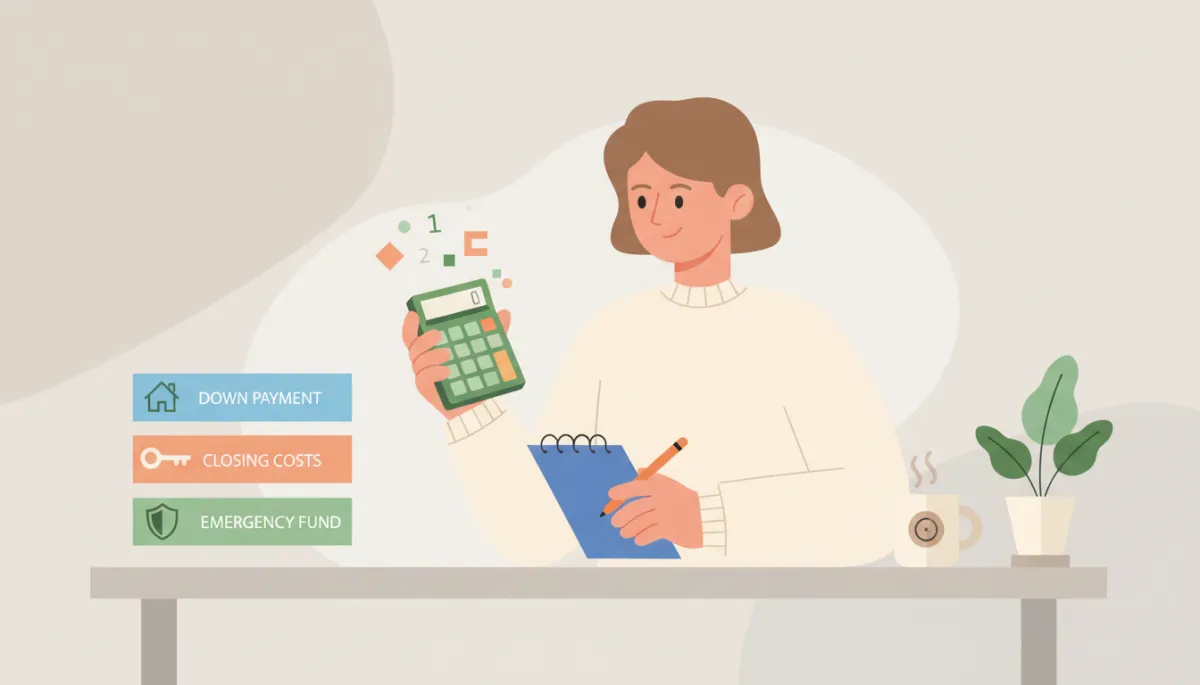
Planning beyond the down payment prevents cash crunches after closing day.
How Much Should You Save? A Simple Rule of Thumb
A practical starting point for many first‑time buyers is: aim for at least 10% down, plus 3%–5% for closing costs, and keep your emergency fund intact. If you can comfortably reach 20% without delaying your purchase for many years, that’s even better—but it’s not mandatory to become a homeowner.
Ultimately, you should save the amount that allows you to:
Keep your total housing payment (mortgage, taxes, insurance, HOA) around 25%–30% of your gross monthly income, and
Still contribute to long‑term goals like retirement and basic savings.
💡 Pro Tip: Once you choose a target—say $35,000—divide it by your timeline. Saving $35,000 over three years means setting aside about $975 per month. If that feels unrealistic, adjust your home price, timeline, or down payment percentage until the plan works on paper and in real life.
The exact number will be different for everyone, but with clear percentages, a realistic price range, and room in your budget for life’s surprises, you can answer the question “How much should I save for a down payment?” with confidence—and a concrete plan.
