Buying Strategy for NC Triangle Homes
Real Estate, NC Triangle, Homebuying Strategy
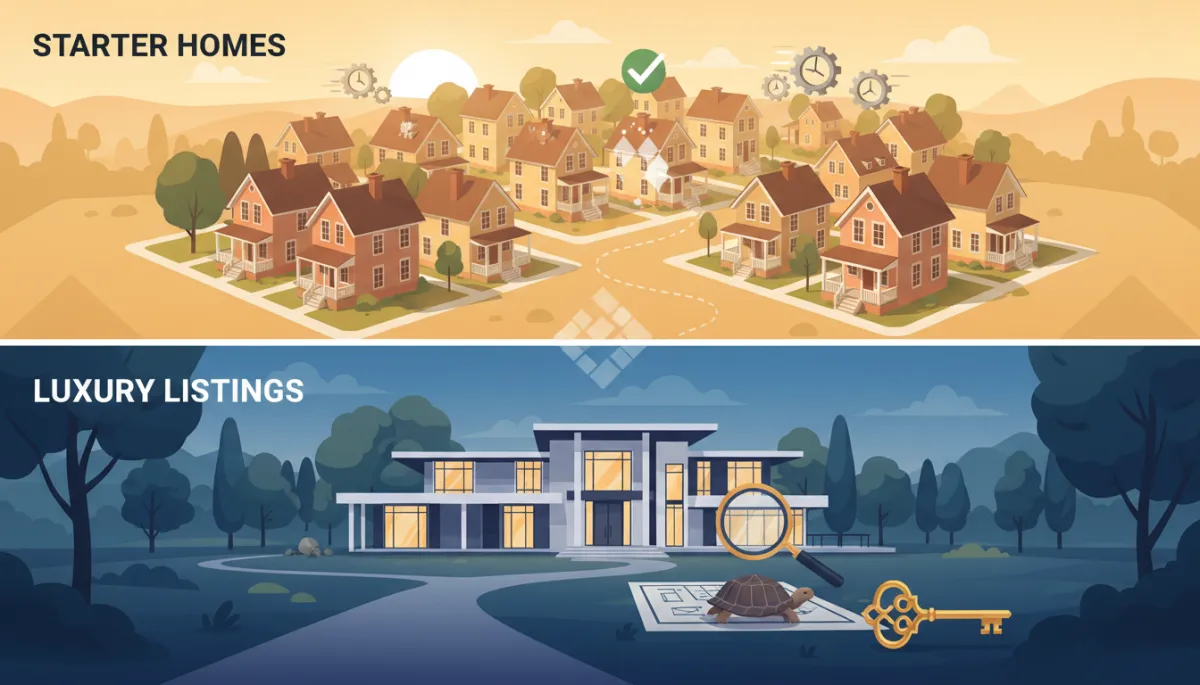
Starter Homes vs. Luxury Listings: Why Your Buying Strategy Must Change in the NC Triangle
The 2026 NC Triangle market is no longer one single “hot” market. It is a set of very different submarkets where starter homes and luxury listings behave almost like two separate worlds. To succeed as a buyer in Raleigh, Durham, Chapel Hill, or the surrounding communities, you cannot use one generic playbook and expect consistent results—you need distinct strategies tailored to each price tier.
One Region, Two Very Different Markets
From the outside, the NC Triangle still looks like one of the Southeast’s most attractive housing markets. Population growth, strong job creation, and resilient demand continue to support prices. Yet beneath that headline, the market has split. Starter homes and luxury properties now follow very different rules in terms of demand, days on market, and negotiation leverage.
Regionwide, active inventory has increased—Wake County alone saw listings rise by roughly 21% year-over-year, and the broader Triangle reached nearly 10,000 active homes this spring. At the same time, the market has cooled from the frenzy of 2021–2022 into a more balanced, data-driven environment. Buyers have more options, but how quickly those options disappear depends heavily on price point and location.
Defining the Segments: Starter vs. Luxury in the Triangle
While exact price cutoffs vary by neighborhood, most Triangle buyers can think of the market in two broad tiers:
Starter and mid-market homes: Typically in the $300,000–$450,000 range, often townhomes, smaller single-family homes, or older properties close to employment hubs and major corridors. This is the segment where many first-time buyers and move-up buyers compete intensely.
Luxury listings: Generally the 90th percentile and above for the region, often $850,000 and up depending on the submarket—custom builds, estate properties, high-end new construction, and homes in premium school zones or gated communities.
These two segments share the same geography, but they do not share the same tempo. That difference in tempo is the root of why your buying strategy must change when you move from one tier to the other.
Days on Market: Speed vs. Staying Power
In the Triangle’s starter and mid-market segment, homes still move relatively quickly. Across Wake, Durham, and Orange counties, median days on market for typical starter homes hover between the low 20s and the mid-30s—roughly two to five weeks. In high-demand pockets like Apex, that figure can drop closer to 16 days, which effectively means the best homes are under contract in a week or less once you factor in offer review and negotiation windows.
Luxury listings tell a different story. National data for upper-tier homes in 2026 shows average days on market in the 60–80 day range for high-end and ultra-luxury properties. That is roughly double—or more—the exposure time of the average starter home. In the Triangle, that often translates to eight to twelve weeks on the market, especially for custom or unique homes that appeal to a narrower buyer pool.
📌 Key Takeaway: A starter home that has been on the market 21 days may already be “late in the game.” A luxury home at 45 days is often just entering its normal negotiation window.
Inventory Levels and Competition Dynamics
The Triangle’s overall inventory has grown, but the distribution is uneven. Months of inventory across the region sits around 3.3 months, which is technically a balanced market, yet that balance hides pockets of intense competition and pockets of buyer leverage.
Starter homes: Inside the Raleigh Beltline, near major employers, or in desirable school zones, starter-level inventory is still tight. Well-priced, move-in ready homes can attract multiple offers, especially from buyers who have been sidelined for the past few years and are now re-entering the market despite 6–7% mortgage rates.
Luxury homes: The luxury tier generally carries more months of inventory. Fewer buyers can comfortably afford these price points with today’s interest rates, and many existing luxury homeowners are “locked in” at sub-4% mortgages, reducing turnover. The result is a smaller, more deliberate pool of active buyers and longer marketing horizons for each listing.
For buyers, this means your leverage and urgency are not determined by the headline “Triangle inventory is up,” but by the specific tier and neighborhood you are targeting. Starter homes in hot areas still behave like a tight seller’s market. Luxury homes, particularly those outside the most coveted enclaves, lean closer to balanced or even slightly buyer-favorable conditions.
Inspection Expectations: Triage vs. Thoroughness
Inspection strategy is another area where starter and luxury markets diverge sharply. During the pandemic boom, many Triangle buyers waived inspections or accepted minimal due diligence to win bidding wars. In 2026, that level of risk is less common—but the pressure is still very different at each tier.
Starter homes: Sellers in the entry and mid-market segment still favor clean, simple offers. That usually means standard inspection contingencies with realistic expectations rather than a laundry list of cosmetic requests. If you insist on extensive concessions for minor issues, you risk losing the home to a buyer who focuses on major systems and safety items only.
Luxury listings: In the luxury tier, a comprehensive inspection process is expected. Buyers often bring in multiple specialists—structural engineers, pool inspectors, roof experts, and even smart-home consultants. Sellers understand that a high-end property with complex systems requires a higher level of scrutiny, and negotiations around repairs or credits are more detailed and extended.
💡 Pro Tip: In the starter segment, focus your inspection negotiations on health, safety, and major systems. In luxury, plan for a multi-phase due diligence process and budget time—and money—for specialized evaluations.
Motivation Factors: Who Is Across the Table from You?
Understanding seller motivation is essential in any negotiation, but the typical motivations differ between starter homes and luxury properties in the Triangle in 2026.
Starter home sellers are often moving for life-stage reasons—growing families, new jobs, or a desire to escape rising rents. They may have tighter timelines and less financial flexibility. Many purchased in the last decade and hold substantial equity, but they are also facing higher rates on their next mortgage. Their priority is usually certainty and speed: a clean contract, strong financing, and minimal drama between contract and closing.
Luxury sellers are more likely to be discretionary movers. They may be relocating for executive roles, downsizing from an estate property, or transitioning to a second home. They typically have more financial cushion, and their priority may be preserving value and finding the right buyer who appreciates unique features rather than simply the fastest closing date. Some are also testing the market, willing to wait for a specific price point.
When you understand these motivations, you can tailor your offer beyond just the number. A starter home seller may respond strongly to a shorter due diligence period and a flexible move-out date. A luxury seller may prioritize proof of funds, a well-structured inspection plan, and evidence that you can navigate jumbo financing without surprises.

Clear data on days on market and inventory helps buyers choose the right strategy.
Why You Need Different Strategies—And the Risk of Cross-Contamination
Many Triangle buyers make the same costly mistake: they use a luxury-style strategy on a starter home, or a starter-home strategy on a luxury property. This “strategy cross-contamination” leads to missed opportunities, overpaying, or unnecessary stress.
When Starter Home Tactics Backfire in Luxury
Rushing to write an offer on day one without fully understanding the property, then discovering complex issues during inspection that derail the deal.
Waiving or minimizing inspections on a high-end home with sophisticated systems, exposing yourself to six-figure repair surprises.
Overbidding early in the listing period when there is limited competition, leaving money on the table that could have been negotiated away with patience.
When Luxury Tactics Lose You a Starter Home
Taking a “wait and see” approach on a well-priced townhome in Cary or Apex, assuming it will sit for weeks, only to watch it go under contract in three days with multiple offers.
Submitting a heavily conditioned offer with long timelines, extensive contingencies, and aggressive repair expectations in a segment where sellers still have options and prefer cleaner contracts.
Expecting large price reductions simply because the overall market has cooled, without recognizing that entry-level inventory remains structurally constrained.
📌 Key Takeaway: Your playbook must match the tempo, risk profile, and motivation structure of the specific segment you are shopping in. What wins in one tier can cost you dearly in the other.
Strategy for Starter Homes: Speed, Clarity, and Clean Offers
In the Triangle’s starter and mid-market, you should think in terms of speed and simplicity—without sacrificing basic protections. Your goal is to be the easiest, most reliable choice for a seller who still has leverage, even in a more balanced market.
Get fully underwritten, not just prequalified. In a segment where multiple offers are still common, a full underwriting approval and strong due diligence funds can set you apart from buyers who are less prepared.
Watch new listings daily. Homes in Raleigh, Durham, and Cary that are well-priced and move-in ready often receive serious interest within the first 48–72 hours. Work with your agent to set alerts and be prepared to tour quickly—sometimes the same day.
Write clean, focused offers. Limit contingencies to what is essential. Use realistic closing timelines, minimize seller-paid costs, and avoid asking for cosmetic repairs. When possible, offer flexibility on the seller’s preferred move-out date or a short post-closing occupancy to make your offer more attractive without simply increasing the price.
Anchor inspection requests to major items. In this segment, you are more likely to win—and keep—the home if you focus on structural issues, HVAC, roof, plumbing, and electrical safety rather than cosmetic improvements. Your agent can help you distinguish between normal wear and serious concerns.
Strategy for Luxury Listings: Patience, Precision, and Due Diligence
In the luxury arena, the winning formula shifts to patience and precision. You are making a large, long-term investment in a property that may have unique features, custom construction, or complex ownership considerations. Rushing this process can create expensive regrets.
Study the micro-market. Luxury in North Hills, Chapel Hill, or inside the Beltline behaves differently from luxury in outer-ring suburbs. Review recent comparable sales, price reductions, and days on market for similar homes. This data will inform whether you should move quickly or negotiate more aggressively over time.
Build a comprehensive due diligence plan. Plan ahead for general inspections plus specialists for pools, wells, septic systems, smart-home technology, or outbuildings. In high-end properties, it is normal to schedule multiple visits and inspections before you are fully comfortable proceeding.
Negotiate with data, not emotion. If a luxury home has been on the market for 60–90 days, you may have room to negotiate price, closing costs, or improvements. Use objective market data and inspection findings to support your position rather than simply “lowballing” and hoping for the best.
Show that you are a serious, capable buyer. Luxury sellers care about certainty. Provide clear proof of funds, obtain early approval for jumbo financing, and demonstrate that you have a professional team—lender, attorney, and inspector—ready to execute.
Step-by-Step Implementation Guide for Triangle Buyers
Step 1: Clarify Your Segment and Priorities
Begin by defining whether you are primarily targeting a starter home, a luxury property, or potentially both. Consider your budget, lifestyle needs, and long-term plans. If your range straddles the upper end of the mid-market and the lower end of luxury, be explicit about which strategy you will use for each price band so you do not default to a one-size-fits-all approach.
Step 2: Study Local Days on Market and Inventory Data
Work with your agent to pull current days on market and months-of-inventory figures for your specific target areas—Apex, Cary, North Raleigh, Durham, Chapel Hill, or beyond. Ask for the data broken out by price bracket. This will show you where the market is still moving quickly (often in starter segments) and where it is slower (commonly in higher price tiers).
Step 3: Align Financing with Your Segment
For starter homes, aim for full underwriting and the ability to move quickly on appraisal and loan approval. For luxury properties, confirm whether you will use jumbo financing, portfolio loans, or a combination of cash and financing, and understand any additional documentation or timing requirements. In both cases, ask your lender how to structure your offer to look as strong as possible relative to your competition.
Step 4: Pre-Plan Your Inspection Strategy
Before you write your first offer, decide what “reasonable” looks like for inspections in your target tier. In the starter segment, commit to focusing on major systems and safety, with realistic expectations about cosmetic wear. In luxury, identify the specialists you may need and budget both time and funds for deeper due diligence. This advance planning will keep you from making reactive decisions under pressure.
Step 5: Define Your Negotiation Boundaries
With your agent, establish clear parameters before you start writing offers: your maximum price, your preferred closing timeline, and where you are willing to be flexible. For starter homes, you may decide to prioritize winning the home even if it means offering slightly above asking in a competitive situation. For luxury, you may prioritize value and be willing to walk away if the seller is not responsive to data-driven negotiation.
Step 6: Avoid Strategy Cross-Contamination in Real Time
As you tour homes, remind yourself which playbook applies. If you are viewing a well-priced starter home in a multiple-offer situation, resist the urge to “wait for a price drop” as you might in the luxury tier. Conversely, when you walk into a high-end listing that has been on the market for 70 days, do not feel pressured to submit an above-asking offer within hours. Check your assumptions against the data for that specific tier and neighborhood before acting.
Step 7: Review and Refine After Each Offer
Whether your first offer is accepted or not, debrief with your agent. How did your strategy align with the actual behavior of the market in that segment? Did you move quickly enough on a starter home? Were you patient and thorough enough on a luxury property? Use each experience to refine your approach while staying grounded in current data rather than old headlines or national averages.
Final Thoughts: Match Your Strategy to the Market You Are Actually In
The NC Triangle in 2026 is a mature, segmented market. Starter homes and luxury listings share the same highways and skylines, but they operate under different rules for days on market, inventory levels, inspection norms, and seller motivation. Treating them as if they were the same market is one of the fastest ways to lose money, lose time, or lose the home that would have been the right fit for you.
By recognizing the differences between these segments—and by deliberately avoiding strategy cross-contamination—you position yourself to act decisively where speed and clean offers matter, and thoughtfully where patience and precision create real value. With the right data, a clear plan, and a segment-specific approach, you can navigate the Triangle’s evolving market with confidence and secure a home that supports your life for years to come.
