From Renter to Owner: Triangle Budget Tips
Home Buying, First-Time Owners
From Renter to Owner: The Exact Triangle Budgets for First-Timers
Moving from paying rent to owning a home is exciting, but the numbers can feel overwhelming. A simple “triangle budget” framework can help you see exactly what you can afford and how to get there with confidence.
Step One: Renter Mindset vs. Owner Mindset
As a renter, you usually care about one number: the monthly payment. If the rent fits your paycheck, you sign the lease and move in. Homeownership adds a few more layers, but the core idea is similar: focus on a payment you can comfortably sustain, then work backward from there using a clear structure instead of guesswork or wishful thinking.
The key shift is understanding that owning a home is not just “Can I get approved?” but “Can I live well with this payment for years?” The triangle budgets give you that reality check before you fall in love with a listing.
The Triangle Budgets: Three Sides of an Affordable Home
Picture a triangle. Each side represents one piece of your home-buying budget. For first-timers, keeping this triangle balanced is what turns a stressful leap into a confident step up from renting to owning.
Side 1: The Monthly Payment Budget
Start with what you already know: your rent. A common guideline is to keep total housing costs at or below 28–30% of your gross monthly income. For many renters, a realistic first goal is: “My total monthly ownership cost should be close to my current rent, plus an amount I can clearly afford.”
Include: mortgage principal and interest, property taxes, homeowner’s insurance, and, if applicable, HOA fees and mortgage insurance.
Test it: could you pay this amount for six months right now without touching savings? If not, adjust down.
Side 2: The Upfront Cash Budget
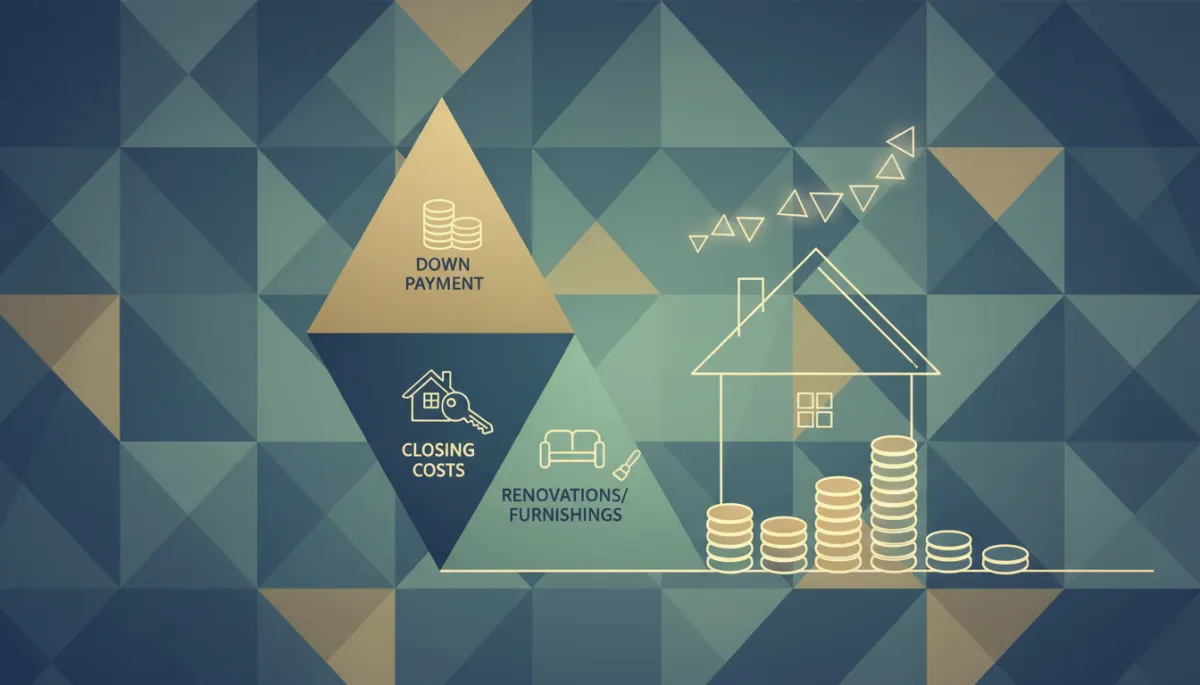
The second side of the triangle is everything you need to close on the home. This includes your down payment, closing costs, and a basic move-in cushion so you are not maxed out on day one. A simple starting framework for first-time buyers is:
Down payment: 3–10% of the purchase price, depending on loan type and comfort level.
Closing costs: roughly 2–5% of the purchase price.
Starter reserve: at least one month of total housing costs set aside after closing.
💡 Pro Tip: Many first-time buyers underestimate closing costs. Ask your lender for a sample estimate early so you can build them directly into your triangle budget.
Side 3: The Safety & Lifestyle Budget
The final side is the one renters often forget: ongoing maintenance and lifestyle. A home that looks affordable on paper can feel suffocating if it erases travel, hobbies, or breathing room for surprise repairs. A practical rule for first-timers is to budget:
1–2% of the home’s value per year for maintenance and repairs, saved monthly.
At least 3–6 months of living expenses in an emergency fund, separate from your down payment.
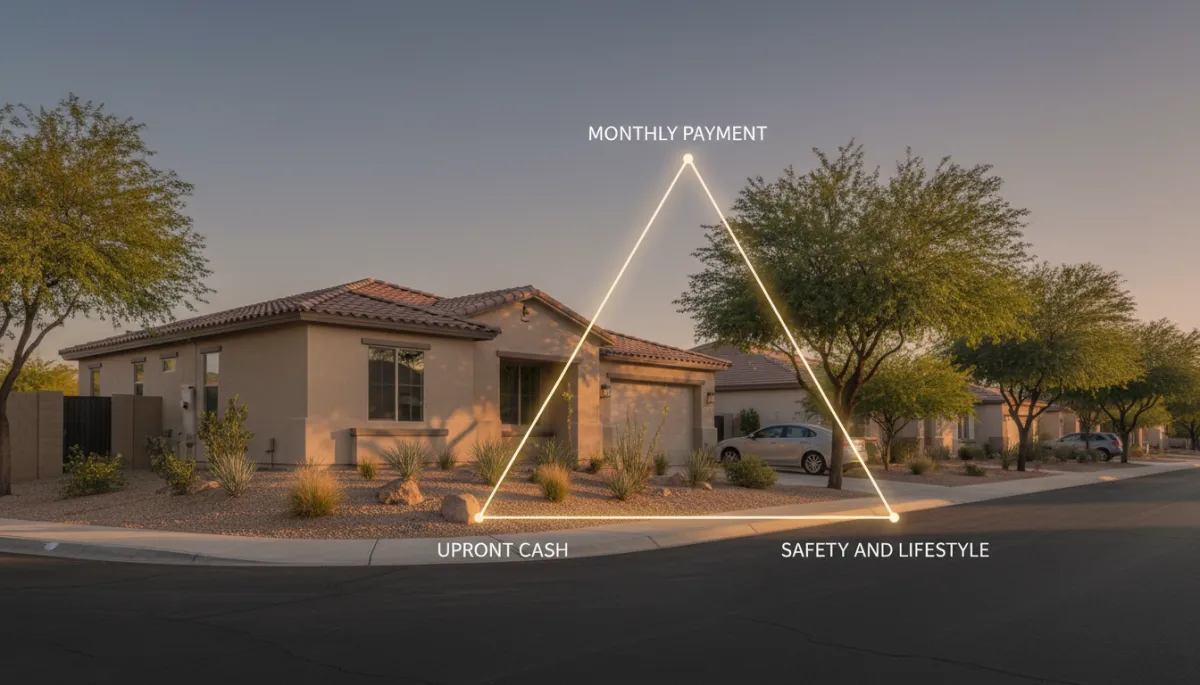
Balancing all three sides of the triangle keeps your first home truly affordable.
Putting It Together: Your Exact Triangle as a First-Time Buyer
To move from renter to owner, sketch your own triangle on paper or in a spreadsheet. On each side, write your real numbers: the monthly payment you can live with, the upfront cash you can reasonably save, and the safety and lifestyle cushion you refuse to sacrifice. Where those three meet is your exact first-home budget range.
When a property fits inside that triangle, you are not just “getting approved” — you are stepping into ownership on solid financial ground. That is the real win: a home you can enjoy, not just a mortgage you can survive.
