3 Cs of Buying in NC Triangle: Price Cuts & More
Real Estate, NC Triangle, Home Buying
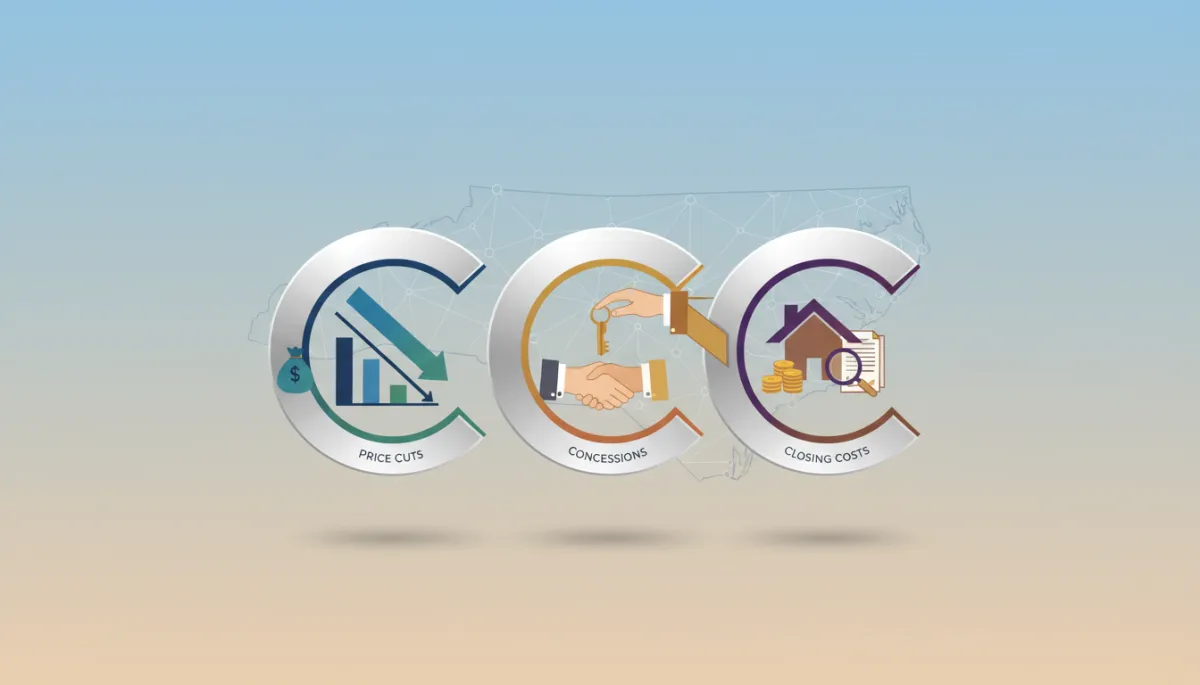
Price Cuts, Concessions, and Closing Costs: The 3 Cs of Buying in the NC Triangle Right Now
The Triangle market has finally cooled from the frenzy of a few years ago, and today’s buyers have more leverage than they’ve had in a long time. Understanding the “3 Cs”—price cuts, concessions, and closing costs—can help you turn these shifting conditions into real savings when you buy in Raleigh, Durham, Chapel Hill, or the surrounding communities.
C #1: Price Cuts — Why Sticker Price Isn’t the Final Word
After years of bidding wars, price cuts are back on the table in the NC Triangle. In the Raleigh–Cary metro, about 18.8% of listings saw at least one price reduction in June 2026, up from 17.5% in May, with the number of price-reduced homes rising from 2,564 to 2,722 in just one month (realtor.com; Federal Reserve Bank of St. Louis). Over the three months ending in May, Redfin found that nearly 38% of Raleigh homes had a price cut, a noticeable increase year over year.
What does that mean if you are buying now? First, don’t assume the asking price is fixed. Homes are spending longer on the market, and sellers are adjusting expectations in real time. A property that has already had a reduction—or has been listed for several weeks without much activity—may be especially open to a well-supported offer below list. At the same time, year-over-year price-cut percentages have eased slightly, suggesting that many sellers are pricing more realistically from the start, so “lowball” offers may still miss the mark in well-priced, move-in-ready homes.
💡 Pro Tip: Ask your agent for a history of price changes and days on market before you write. A home that’s been sitting for 30+ days with no reductions is a very different negotiation than a fresh listing.
C #2: Concessions — The Quiet Savings Most Buyers Overlook
While price cuts get the headlines, concessions often create the biggest impact on your monthly payment and cash at closing. In May 2026, an estimated 64.1% of Raleigh sellers offered concessions, far above the national figure of about 46% for the same month (Redfin). That is a clear sign that Triangle buyers can negotiate how they pay, not just how much they pay.
Common concession types in today’s market include:
Interest-rate buydowns (often 2–1 buydowns), where the seller contributes roughly $6,000–$10,000 to temporarily reduce your rate and shrink your early-year payments.
Closing cost credits, frequently in the range of 2–3% of the purchase price, which can dramatically reduce the cash you need to bring to the table.
Repair credits after inspections, sometimes totaling $2,000–$15,000, allowing you to handle improvements on your own timeline instead of pushing sellers to complete work before closing.
Extras like home warranties or including appliances and other personal property, which can help protect your budget in the first year of ownership.
Strategically, concessions can be more powerful than a straight price reduction. A seller credit toward your closing costs or a rate buydown keeps neighborhood values intact for the seller while giving you immediate, tangible financial relief. In a balanced but still competitive Triangle market, that win–win structure can make your offer stand out without overextending your budget.
Combining a modest price cut with smart concessions can save buyers thousands at closing.
C #3: Closing Costs — The Real Cash You’ll Need in the Triangle
The third “C” is the least glamorous but arguably the most important to plan for: closing costs. North Carolina’s statewide averages can be misleading. While one 2025 estimate put typical buyer closing costs at around $2,480, or just 0.56% of the sale price (Rocket Mortgage), the Triangle tells a different story. Because of higher home values and local fees, buyers here typically pay about 2–5% of the purchase price in closing costs (Brandon Yopp Real Estate).
On a $500,000 home in Raleigh, Durham, or Chapel Hill, that means an additional $10,000–$25,000 on top of your down payment. Those costs may include lender fees, attorney fees (North Carolina is an attorney-closing state), title insurance, recording fees, prepaid taxes, and insurance escrows. Meanwhile, sellers in North Carolina often pay 2–3% in base closing costs, with total expenses sometimes reaching 8–10% of the sale price once commissions are factored in, according to statewide and Triad-region data.
📌 Key Takeaway: In the Triangle, budgeting just for your down payment is not enough. Plan for up to 5% of the purchase price in buyer closing costs—then use concessions to bring that number down.
Buying in the NC Triangle Right Now: How to Put the 3 Cs to Work
As of late July 2026, the Triangle market is described as “balanced” rather than overheated. Inventory is higher than during the pandemic boom, days on market are up roughly 24% in some areas, and sellers are more open to negotiation—but demand remains strong, with median sales prices in the $400,000s and average prices above $500,000 (Triangle market reports; bizjournals.com; tanawiddows.com).
In this environment, successful buyers:
Use data on price cuts to target homes that are sitting or have already been reduced, where sellers may be more flexible on final price.
Build concessions into their offer, asking for closing cost credits, rate buydowns, or repair allowances that directly address their biggest financial pain points.
Plan conservatively for closing costs, then treat any seller help as a bonus that lets them keep more cash in reserve after move-in.
The bottom line: buying in the NC Triangle right now is less about chasing the lowest sticker price and more about crafting a smart, holistic offer. When you understand how price cuts, concessions, and closing costs interact, you can structure a purchase that fits your monthly budget, protects your savings, and still gets you the home you want in one of the fastest-growing regions in the country.
