
2026 Raleigh-Durham Real Estate Market Insights
Real Estate, Raleigh-Durham Market Update
2026 Raleigh–Durham Real Estate Market Update: What Buyers and Sellers Need to Know
The Raleigh–Durham housing market in 2026 is finally exhaling after years of breakneck growth. Inventory is up, prices have cooled or flattened in many pockets, and both buyers and sellers are adjusting to a more balanced, data‑driven landscape. Here is what the latest numbers really mean for your next move in the Triangle.
2026 Raleigh–Durham Market Snapshot: From Red‑Hot to Refreshingly Balanced
After several years as one of the nation’s most competitive markets, the Triangle is shifting toward balance. Across Raleigh, Durham, and Chapel Hill, active inventory has climbed to roughly 3.5–3.7 months of supply, according to mid‑2026 reports, a clear move away from the ultra‑tight conditions of 2021–2022 (Nest Realty; Raleigh Real Estate Search).
Prices are no longer racing ahead. In Raleigh–Cary, median listing prices have slipped between about 2% and 4% year‑over‑year, with Realtor.com showing a roughly 4% drop in both list and sold prices in Wake County (Realtor.com). Redfin reports the median sale price in Raleigh around $421,000 over the three months ending July 2026, down 5.4% year‑over‑year (Redfin), while Zillow’s typical home value hovers near $435,000, off about 2% (Zillow).
Durham is holding up slightly better. July 2026 data show a median sales price of about $410,000 in Durham County and $405,500 in the city itself (Durham REALTORS®). Earlier forecasts even called for modest 2.9% price growth in the Chapel Hill–Durham corridor, versus a projected 3.7% decline in Raleigh–Cary (News & Observer).
Why the Market Is Normalizing: Jobs, Rates, and New Supply
Under the surface, the Triangle’s fundamentals remain strong. Regional employment is expected to grow about 1.5% in 2026, while the population pushes toward 2.3 million residents (Southeast Economic Advisors). Incomes are rising, net migration is solid, and mortgage rates have eased into the low‑6% range, helping an estimated 27,000 additional households qualify for a median‑priced home (NAR).
At the same time, the breakneck pace of new construction has cooled, especially in multifamily. Deliveries are down more than 60% in 2026, which is helping vacancy rates improve and rents stabilize around $1,585—up a modest 1.6% year‑over‑year (Northmarq). With fewer new units hitting the market, especially in downtown Durham and select submarkets, both renters and investors can expect a slower, steadier pace of change rather than dramatic swings.
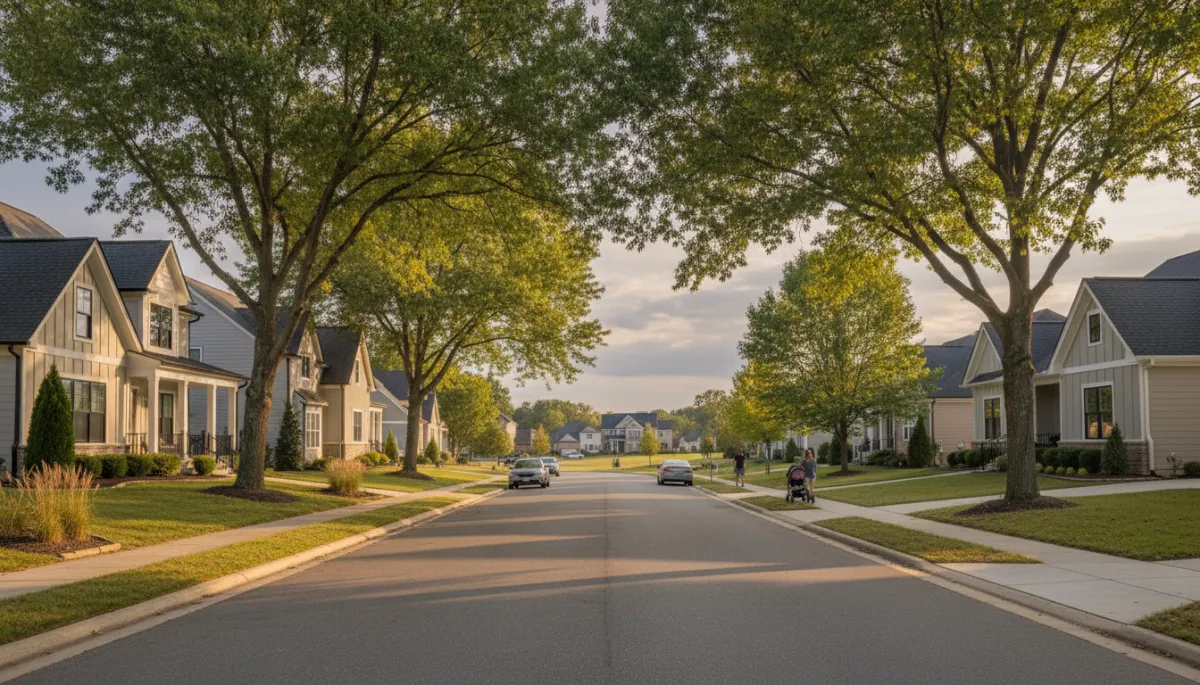
Rising inventory and steady demand are shifting the Triangle toward a more negotiable, balanced market.
What Buyers Need to Know in 2026
For buyers who sat out the frenzy of the last few years, 2026 is a welcome change. More listings, longer days on market, and moderating prices translate into real negotiating power.
You have more choices—and more time. Region‑wide days on market have risen into the mid‑20s, and in some parts of Wake County, into the 50‑day range. That means less pressure to waive inspections or rush into offers simply to compete (Realtor.com).
Price growth is modest—and sometimes negative. With forecasts ranging from slight declines to flat values for Raleigh, buyers can focus less on “fear of missing out” and more on the right home and neighborhood fit (Sialim; Zillow).
Affordability is improving at the margins. While prices remain elevated compared with pre‑pandemic levels, income growth and slightly softer pricing are bringing more homes within reach, especially in select Durham and outer‑ring suburbs.
💡 Buyer Tip: Use the extra time on market to negotiate for closing cost credits, repairs, or rate buydowns rather than just focusing on price alone.
What Sellers Need to Know in 2026
A balanced market does not mean a bad market for sellers—far from it. Triangle homes are still selling, and closed sales jumped more than 9% in June 2026 compared with a year earlier, with the regional median sales price around $415,000 (Raleigh Real Estate Search). But strategy matters more than ever.
Pricing must reflect today’s reality, not last year’s peak. Overpricing in a market where buyers have options can quickly lead to stale listings and price cuts. Lean on hyper‑local data—your neighborhood, not just your ZIP code.
Presentation and condition carry more weight. With more homes to compare, buyers are less willing to overlook deferred maintenance. Thoughtful updates, neutral staging, and professional photography can still command a premium.
Expect fewer bidding wars—but solid, serious offers. Many homes now receive around two offers on average rather than a dozen (Redfin). The focus has shifted from speed to quality: clean financing, realistic contingencies, and flexible closing timelines.
📌 Seller Insight: Homes that are priced correctly and show well are still moving quickly—sometimes within the first few weeks—even as the broader market cools.
Looking Ahead: How to Navigate the Rest of 2026
Forecasts for the remainder of 2026 point to gentle, not dramatic, movement. Some models anticipate a slight decline in Raleigh home values into 2027, while others call for flat or modest growth. Region‑wide, Southeast Economic Advisors project the median existing‑home price to edge up to roughly $438,000 by year‑end—about 1.5% higher than 2025 (Southeast Economic Advisors).
For both buyers and sellers, the key in 2026 is local nuance. Infrastructure projects like the completed I‑540 loop are reshaping commute patterns and opening up new pockets of value, while established in‑town neighborhoods continue to command premiums (Jim Allen Group). Working with professionals who track micro‑market shifts—down to school zones and street‑by‑street trends—can make the difference between overpaying and seizing a smart opportunity.
In short, 2026 is neither the bargain‑basement buyer’s market some hoped for, nor the runaway seller’s market of a few years ago. Instead, Raleigh–Durham is settling into a healthier middle ground—one where informed decisions, realistic expectations, and a clear strategy matter more than ever.
